Gardening Services in Earls Court

Gardening Services in Earls Court means practical, well-planned outdoor care for homes and shared properties that need tidy borders, healthier planting, and lawns kept in shape. Our work can cover routine maintenance, seasonal tidy-ups, hedge trimming, lawn mowing, garden clearance, and the shaping of planting areas so the space feels manageable rather than overgrown. We focus on clear, usable results and careful handling of the site, with attention to detail where plants, paths, fences and access routes all need to work together.
If you need gardening support in Earls Court, the most useful starting point is the current condition of the garden and the result you want to achieve. Some spaces need regular visits to stay neat, while others need a one-off return to order after a period of neglect or after a tenancy change. We can help with both approaches, always matching the work to the condition of the ground, the planting, and any access limits. For a straightforward quotation request, it helps to outline what is growing, what has become difficult to manage, and whether you want ongoing maintenance or a single visit.
We keep the service broad enough to suit small courtyards, front gardens, shared entrances and larger private plots, but the work is always shaped by what the garden actually needs. That can mean cutting back overgrowth, removing waste, tidying edges, improving visibility, or simply maintaining a cleaner finish on a regular cycle. If you already know the main task, you can ask for a quote with that priority in mind; if not, a brief description of the site is enough to begin.
Regular garden maintenance for tidy, usable outdoor spaces
Regular maintenance is the part of gardening that keeps a property looking cared for between larger jobs. In practical terms, it often combines mowing, edging, pruning, weed reduction and general tidying so plants do not compete with walkways, doors or communal areas. The aim is not simply to make the garden look neat for one day, but to keep growth at a level where the space remains easy to enjoy and easier to look after over time.
For many properties, the most useful schedule is one based on growth rather than the calendar. Lawns, hedges and border plants all change at different speeds through the year, so our maintenance approach stays flexible. We can work around the layout of the garden, the type of planting, and any areas that need to be left undisturbed. Where a space includes both decorative planting and functional access, we aim for a finish that is tidy, balanced and practical.
What maintenance can include
Typical maintenance work may include the following, depending on the site and season:
- mowing and edging of lawns
- light pruning and trimming of shrubs
- weed control in borders and paved areas
- leaf and debris clearance
- general sweeping and tidy finishing
Garden clearance for overgrown or neglected areas
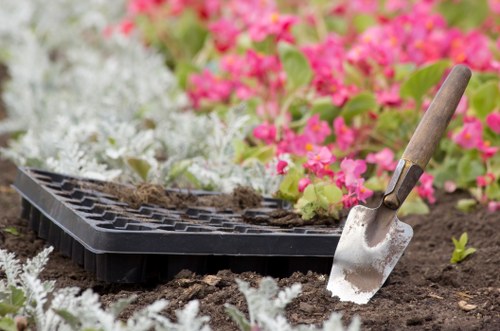
Garden clearance is often the right choice when a space has become too congested for ordinary upkeep. That might involve dense weeds, fallen debris, untidy cuttings, old pots, brambles or mixed green waste that has built up over time. A clearance job usually begins by separating what can be cut back, what needs careful removal, and what should be left in place because it is still part of the intended planting or structure of the garden.
We handle clearance with an emphasis on control and sequence. Large or awkward areas are easier to manage when the work is broken into sections, allowing paths, beds and boundaries to be opened up without disturbing every part of the garden at once. This can be especially useful where access is tight or where the site includes delicate planting beside harder surfaces. The result is a clearer, safer and more usable space, ready for follow-up maintenance or further landscaping.
Garden clearance in Earls Court can also be a sensible first step before redesign, hedge work or a fresh maintenance plan. Once unwanted growth and waste are removed, it becomes much easier to see the shape of the site, decide what to keep, and judge the work needed next. If you are comparing options, a brief description of the problem area and any items that need removing is usually enough to request a quotation.
Lawns, edges and border finishing
A well-kept lawn depends on more than mowing alone. The edges, corners and nearby borders matter just as much, because uneven margins or missed strips can make even a freshly cut lawn look unfinished. Our lawn work can include trimming, edging and clearing around obstacles so the grass has a clean outline and the surrounding planting remains tidy. Where needed, we also take care of the areas that standard mowing can leave behind, such as narrow access strips or awkward sections beside walls and fences.
Border finishing is useful when the garden needs a crisper shape without changing the planting itself. This may involve removing weeds from the edge of beds, neatening overhanging growth, and creating a more defined transition between lawn, paving and shrubs. It is a practical way to improve presentation while keeping the existing layout intact. For many customers, this kind of work is what turns a patchy-looking garden into one that feels properly maintained.
When a lawn or border has become uneven, the right approach depends on the surface, the season and how much growth is present. We work carefully around plants and hard landscaping so the job improves the whole garden rather than just one visible area. If you need a one-off tidy or recurring lawn care, you can ask for pricing based on the size and condition of the space.
Hedge trimming and controlled shaping
Hedge trimming is one of the most useful services for keeping a garden structured. A hedge that is left to run unchecked can block light, encroach on paths, and lose the neat outline that makes it useful as a boundary or screen. Trimming restores the shape, removes the excess growth, and helps the hedge sit properly within the rest of the garden. The work can be simple and light, or more involved where the hedge has become uneven or overgrown.
Controlled shaping is especially valuable when the hedge forms part of a visible frontage or shared boundary. The goal is to keep the line even without stripping the hedge back more than necessary. That means considering the natural growth pattern, the hedge’s purpose and how much cutback is appropriate for the condition of the plant. In many cases, the best finish is one that looks balanced from both sides and still leaves the hedge healthy enough to continue growing well.
Why careful trimming matters
Good hedge work is not just about appearance. It can also improve access, reduce interference with paths and windows, and make it easier for the rest of the garden to receive light. A hedge that is trimmed regularly tends to be more manageable than one cut back only after it has become dense and unruly. If you are planning wider garden work, hedge trimming is often one of the first tasks worth scheduling alongside mowing or clearance.
Landscape gardening for changes to layout and planting

Landscape gardening covers work that changes how the garden functions as a whole. Rather than maintaining what is already there, it may involve reorganising beds, defining new areas, updating planting, or reshaping sections of the space so the layout feels more intentional. The work can be simple or more involved, depending on the size of the garden and the condition of the existing features. It is often most useful when a garden has potential but lacks structure.
In a compact urban setting, landscape gardening often needs to make the most of the available ground without making the garden feel crowded. That may mean balancing open surfaces with planting, creating clearer movement through the site, or improving the relationship between lawn, borders and hard landscaping. Good planning matters because every change affects light, access, maintenance and the overall visual rhythm of the garden. We approach this kind of work with a practical eye and a focus on what will stay manageable.
When landscape work is considered carefully, it can support later maintenance rather than create extra difficulty. Plant choices, spacing and boundaries all influence how much upkeep the garden will need, so the design should be judged not only by how it looks at the start, but by how it will be cared for afterwards. If you want to discuss a change of layout or planting, start with a simple outline of the area and the result you want to achieve.
About Earls Court
Earls Court is an area in west London known for its dense urban streets, mixed residential and commercial character, and long association with transport and exhibition history. The district takes its name from the medieval manor of Earl’s Court, and over time it developed from rural land into part of the capital’s expanding inner suburbs. The arrival of the railway in the nineteenth century brought faster growth, and the area became more closely linked with the wider changes that shaped Kensington and neighbouring districts. Its street pattern reflects that layered history, with late Victorian and Edwardian terraces standing alongside later apartment buildings and converted properties. Much of the area is defined by compact blocks, mansion buildings and smaller residential roads rather than large open spaces, which gives it a distinctly urban feel. Earls Court Road and the surrounding streets remain important movement corridors, while the locality also sits within easy reach of Kensington, West Brompton and Fulham. The former exhibition centre site, which for many years was one of the capital’s most recognisable landmarks, has itself become part of the area’s changing identity. Nearby green spaces, including smaller squares and local gardens, provide a contrast to the built-up streetscape, and the wider borough’s parks and garden squares are part of the district’s everyday character. Today, Earls Court combines historical depth with a busy contemporary profile shaped by housing, hospitality, and the continuing evolution of its buildings and streets.
Tree work, pruning and removal where access is limited
Some gardens need more than light trimming, especially where trees have grown too large for the available space or where dead, weak or awkward branches are affecting the site. Tree work can involve pruning to reduce excess growth, lifting the canopy to improve clearance, or removing a tree where it is no longer suitable for the garden. The level of work depends on the condition of the tree, its position, and the practical limits of the surrounding area.
In tighter gardens, access and protection of nearby surfaces are important. Careful planning helps avoid damage to fences, paths, planting and neighbouring features while still allowing the task to be completed thoroughly. Tree pruning can also improve the balance of a garden by reducing shade and opening the view to other planted areas. Where removal is necessary, the aim is to leave the site clear and manageable rather than simply cut down the obvious growth and leave the rest unfinished.
For any tree-related job, it is sensible to think about what should happen next once the work is done. Some customers want the remaining space cleared and tidied; others want the area left ready for new planting or future redesign. Either way, the more clearly the task is described, the easier it is to prepare an accurate quotation and match the work to the site.
Choosing the right level of work for your garden

Different gardens need different levels of attention, and the right service is often the one that matches the site rather than forcing it into a fixed package. A tidy front garden may need only mowing and light trimming, while a neglected rear space may need clearance before any regular upkeep can begin. This is why it helps to think in terms of condition, access and outcome rather than just the name of the service. A clear brief can save time and make the work more accurate.
When choosing the level of work, it can be useful to separate immediate problems from longer-term aims. Immediate problems may include overgrowth, blocked access or untidy edges. Longer-term aims may involve easier maintenance, better shape, healthier planting or a more attractive layout. Once those priorities are clear, we can recommend a practical approach that fits the garden. If you are not sure where to begin, a short description of the current state is often enough to start the process.
Useful details to include in an enquiry
To prepare a quotation efficiently, it helps to mention a few basic points: the type of work needed, the approximate size or layout of the garden, any difficult access, and whether you want a one-off visit or ongoing care. You do not need to write a long explanation. A simple note about lawn areas, hedges, overgrowth or clearance needs is usually sufficient. Clear information makes it easier to suggest the right level of work without adding unnecessary extras.
Gardening work that suits shared and private spaces
Gardening needs vary from property to property, but the common goal is to keep the outdoor space orderly and practical. Shared areas often need consistent tidying so entrances, paths and communal edges stay presentable for regular use. Private gardens may call for a more tailored balance between planting, lawn space and the level of maintenance the owner wants to take on. In both cases, the work is most effective when it respects how the garden is actually used.
That might mean trimming growth away from windows and access routes, keeping lawns in shape, clearing seasonal debris or reducing the amount of time spent dealing with unruly borders. It can also mean deciding what not to disturb. Some plants are better left in place, some surfaces need gentler handling, and some gardens benefit from gradual improvement rather than a single heavy intervention. The point is to leave the area more orderly without making unnecessary changes.
If your garden combines several tasks, it often makes sense to combine them in one visit so the space can be finished properly. A single plan for mowing, trimming and clearance is usually more efficient than treating each part in isolation. Request a quote if you would like the work assessed as one combined job.
Pricing factors and quotation requests
Pricing for gardening work depends on the work involved rather than on a fixed formula. The main factors are usually the size of the area, the amount of growth or waste, the type of task, and any difficulties with access or handling. A regular maintenance visit is often different from a clearance job because the labour, materials and time involved are not the same. That is why a brief but specific description is so useful when you want an accurate estimate.
It also helps to say whether the job is a one-off task or part of a longer pattern of care. Regular visits may focus on smaller amounts of work each time, while occasional jobs can require a more thorough reset before the garden is brought back under control. If the space includes hedges, lawns, borders or trees, noting which parts need attention first can make the quotation more precise. When the scope is clear, the next step is simply to ask for pricing on that basis.
For a straightforward enquiry, you can describe the site in plain language and state the result you want. That is often enough for us to understand whether the job is mainly maintenance, clearance, trimming or a mix of tasks. If you are ready to move ahead, request a quotation today.
Seasonal care and keeping the garden manageable

Seasonal changes affect gardens in different ways, and a practical maintenance plan should reflect that. In stronger growing periods, mowing, edging and trimming may need to be more regular. In quieter periods, the emphasis may move towards tidying, leaf clearance, pruning and keeping the garden free from build-up. The key point is that the work should keep pace with the site so it remains manageable rather than waiting until growth has become difficult to handle.
Seasonal care also helps preserve the garden’s basic structure. Borders stay visible, paths remain clear, and plants are less likely to be overshadowed by unchecked growth. When the work is carried out with that broader picture in mind, the garden feels more ordered across the year, not just after a single visit. This makes it easier to plan future care and reduces the chance of larger problems developing unnoticed.
Whether you need a one-off tidy-up, clearance before redesign, or a regular pattern of gardening support, the most useful next step is a clear description of the site and the result you want. If you are ready to take the next step, ask for a quote and we can help shape the right level of work for your garden.